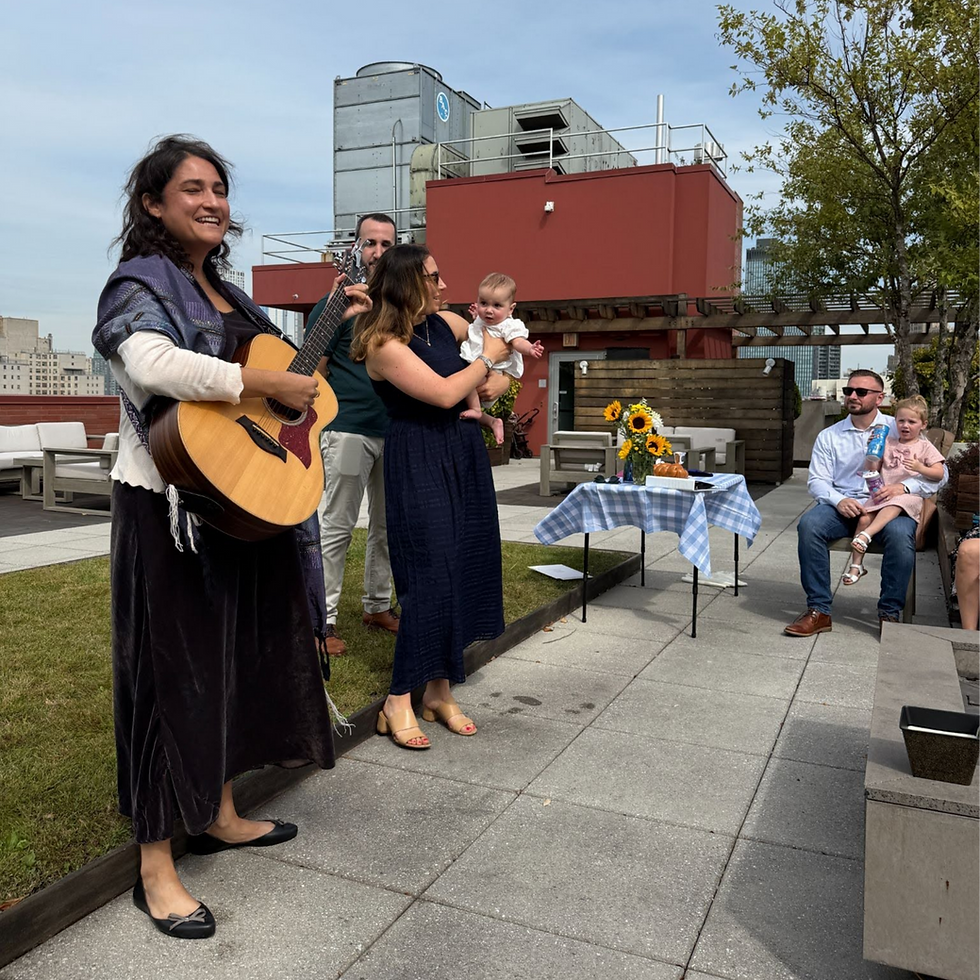
Gemma’s Baby Naming Ceremony: A Family of G Names


Gemma's baby naming ceremony was a warm, intimate gathering to honor a tradition that stretched across generations. Gemma's English name honored her grandmother Gertrude, continuing a pattern of "G" names that dated back to her ancestors.
Jewish naming ceremonies often include two sets of names: the name a child uses in everyday life, and the Hebrew name that connects them to Jewish tradition. In Gemma’s case, these two layers worked together beautifully.
On the day of her naming ceremony, Gemma received the Hebrew name Golda Rina. Like her English name, it was chosen with family in mind. Golda Rina was the name of her great-grandmother, a woman whose presence is still felt strongly in the family. By choosing this name, Gemma carried a piece of that legacy forward. In Jewish tradition, names are never only about the present moment; they link generations, creating a quiet thread between past, present, and future.
The ceremony itself was intimate and relaxed. Baby namings often take place in homes or private spaces where the atmosphere can feel less formal than a synagogue service, and this gathering was no different. Friends and family stood close enough to see Gemma’s expressions and hear every blessing clearly. Moments like these remind me how personal any Jewish ritual can feel when it is placed directly inside the life of a family.
A particularly poignant moment in Gemma’s ceremony was the involvement of her grandparents who led kiddush and motzi. The kiddush (the blessing over wine) marked the sacredness of the moment, acknowledging the joy of welcoming a new child into the community. The motzi (the blessing over bread) helped shift the gathering from ceremony into celebration. Jewish ritual often moves fluidly between sacred words and shared food (and eating is our most sacred Jewish tradition!), and that transition always feels natural.

Gemma remained peaceful throughout the morning, unaware of the significance being placed around her but aware that something special was taking place. That's often the way with baby namings—the baby exists at the center of the moment while the adults reflect on meaning, continuity, and the future.
By the end of the gathering, Gemma's Hebrew name had been spoken publicly for the first time, linking her to both her great-grandmother Golda Rina and the Jewish community she had now formally entered. It was a ceremony that honored memory while welcoming new life, feeling completely natural for this family.
Baby namings don’t need to be elaborate to be meaningful. Often the most meaningful ceremonies simply reflect the family gathered in the room. Surrounded by relatives with names sharing the same letter, Gemma's place in their family story felt clear.